

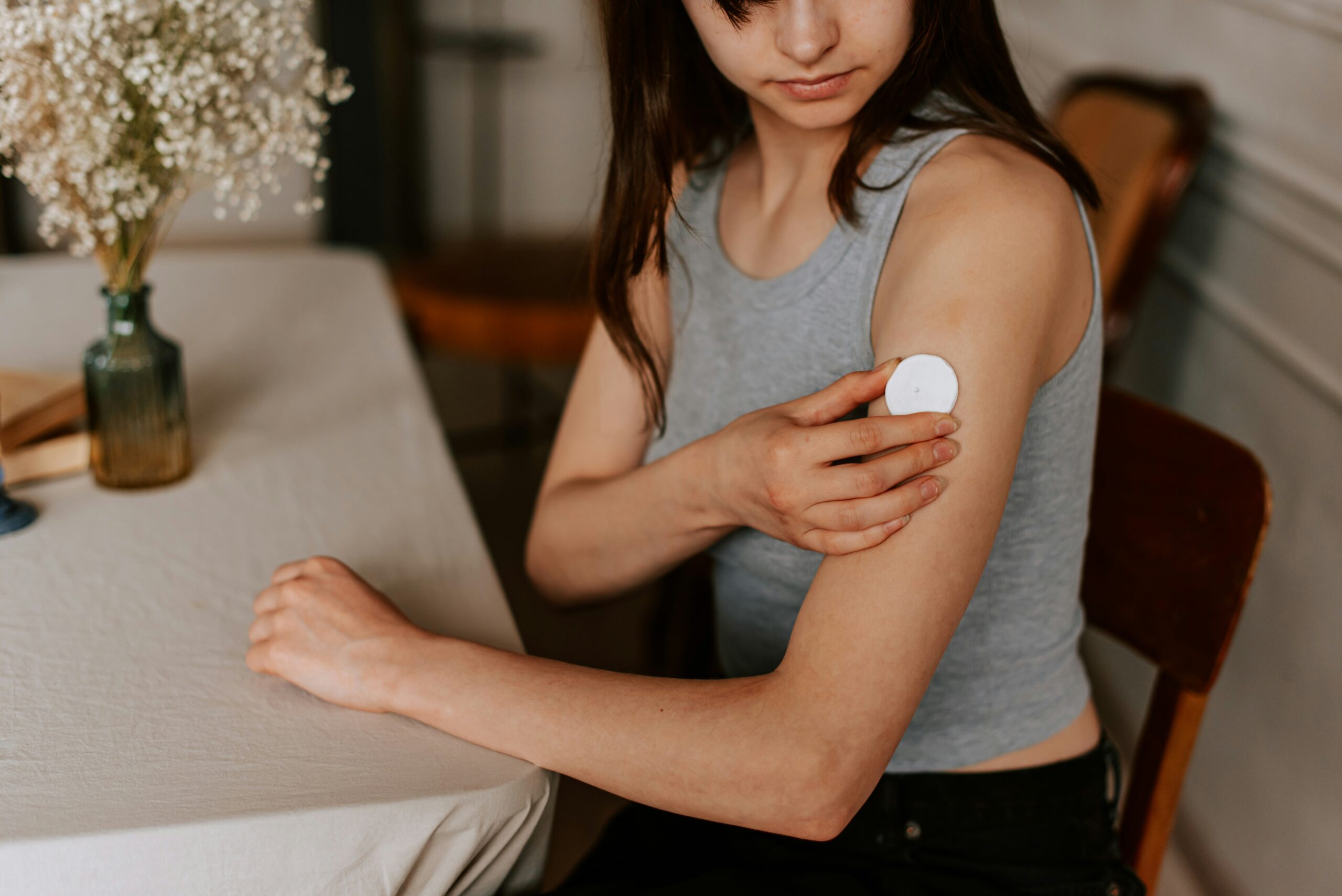
Why Caregivers Rely on CGM Sharing Features
Glucose emergencies happen fast—sometimes too fast for the person experiencing the low to react. The ADA confirms that CGMs reduce severe hypoglycemia events and allow family or caregivers to intervene sooner.
What’s happening
CGM sharing sends real-time alerts to the phones of caregivers, parents, or trusted loved ones. When levels drop dangerously, someone else is notified—even if the patient is asleep, driving, or cognitively impaired during a low. During a 2024 educational video on diabetes tools, Sally explained how sharing features add a protective layer for families:
“Parents can get notifications if their child is going critically low or high.”
— Sally Figueroa
This reassurance changes daily life for households managing Type 1 or Type 2 Diabetes.
What you can do
- Enable sharing in the CGM app settings.
- Choose at least one adult who can respond to alerts.
- Review alert thresholds with your endocrinologist.
- Keep glucagon accessible in multiple locations.
What to avoid
- Assuming alarms will wake you every time.
- Relying on vibration-only modes during sleep.
How to move forward
Shared monitoring isn’t surveillance—it’s safety infrastructure for families navigating unpredictable glucose swings.
Our Pay It Forward Approach
Every small act of sharing creates a ripple. If this piece resonated with you, consider sending it to someone who might need the same hope today—or leave us a comment in the section below with your own saving story so thousands can benefit from it. No one should have to navigate the cost of illness alone.
Verification Note
All sources checked and verified December, 2025.
All sources are government, nonprofit, peer-reviewed, FDA-regulated, or manufacturer primary documentation directly supporting CGM sharing, caregiver alerts, and hypoglycemia prevention.
Evidence that CGMs reduce severe hypoglycemia and enable earlier intervention
American Diabetes Association (ADA) — Continuous Glucose Monitors (CGMs): Safety & Clinical Benefits
Confirms CGMs significantly reduce severe hypoglycemia and improve detection of dangerous glucose excursions.
https://diabetes.org/diabetes/technology/continuous-glucose-monitors-cgms
National Institutes of Health (NIH) / PubMed Central — Continuous Glucose Monitoring and Severe Hypoglycemia Reduction
Peer-reviewed analysis showing CGM use reduces frequency and duration of severe hypoglycemic events.
https://www.ncbi.nlm.nih.gov/pmc/articles/PMC8397018/
Journal of Diabetes Science and Technology — CGM Alarms and Caregiver Response
Demonstrates that real-time alerts enable faster intervention by caregivers, particularly during sleep or cognitive impairment.
https://journals.sagepub.com/doi/10.1177/19322968211047787
Caregiver sharing, remote monitoring, and family safety
Dexcom — Follow App & Sharing Features (Official Product Documentation)
Explains how CGM data sharing sends real-time alerts to caregivers, parents, and trusted contacts.
https://www.dexcom.com/en-us/support/dexcom-follow-app
Abbott FreeStyle Libre — LibreLinkUp Caregiver Monitoring
Manufacturer documentation describing caregiver alerts, shared glucose data, and emergency notifications.
https://www.freestyle.abbott/us-en/products/librelinkup.html
American Academy of Pediatrics — CGM Use in Children and Adolescents
Supports caregiver access to CGM data for pediatric safety and overnight hypoglycemia prevention.
https://publications.aap.org/pediatrics/article/147/5/e2021051485/180373
Hypoglycemia risk during sleep and impaired awareness
Centers for Disease Control and Prevention (CDC) — Severe Hypoglycemia Risks and Emergency Response
Confirms hypoglycemia can impair awareness, judgment, and consciousness, increasing reliance on others for intervention.
https://www.cdc.gov/diabetes/basics/low-blood-sugar.html
National Institute of Diabetes and Digestive and Kidney Diseases (NIDDK) — Hypoglycemia Unawareness
Explains why patients may not feel or respond to dangerous lows, especially during sleep.
https://www.niddk.nih.gov/health-information/diabetes/overview/preventing-problems/hypoglycemia-low-blood-glucose
Emergency preparedness and glucagon access
American Diabetes Association — Glucagon: Emergency Use and Caregiver Role
Outlines the importance of caregivers having access to glucagon when severe lows occur.
https://diabetes.org/diabetes/medication-management/blood-glucose-testing-and-control/glucagon
FDA — Nasal Glucagon Approval and Emergency Use
Federal documentation confirming simplified administration improves emergency response by non-medical caregivers.
https://www.fda.gov/news-events/press-announcements/fda-approves-first-nasal-spray-treatment-severe-hypoglycemia
Important Disclaimer
The content on HealthSavingsExpert.com, including personal stories, community tips, articles, and any related materials, is provided for informational and educational purposes only. It is based on individual experiences and shared knowledge and is not intended as medical advice, diagnosis, treatment recommendations, financial advice, or a substitute for professional healthcare or insurance guidance.
Nothing on this site should replace consultation with a qualified physician, licensed healthcare provider, or other appropriate professional. Always seek the advice of your doctor or other qualified health provider with any questions you may have regarding a medical condition, treatment, medication, cost-saving strategy, or insurance matter. Never disregard professional medical advice or delay seeking it because of something you have read here.
The editorial team does not endorse any specific products, services, providers, or actions described. Use of this information is at your own risk, and we assume no responsibility or liability for any reliance on the content.